Monday, August 29, 2016


Monday, August 15, 2016
Royal Music Association - Philosophy and Music.
Of course it would be more accurate to say mostly 'analytic philosophy' and music.
q.v. should you doubt it this array of
Pictures from aeons ago, taken in 2012, including Andrew Bowie, Lydia Goehr, Roger Scruton, et al and sundry, all rescued from imminent 'closing of the net,' i.e., the shuttering of Picasa.
Drat on that last.
 "Lydia Goehr now raises a useful question by noting what Adorno does beyond what we take him to be saying." 20 July 2012 Tweet. Ye olde.
I also offered a paper there that was in production as The Hallelujah Effect (published in 2013) sort of like the picture below which was taken at the Phenomenology and Media conference in San Diego (I took all the pictures in London ... I also took pictures in San Diego, but not this one...)


The book was about k.d. lang, just one song, one version...
 In the context of the culture of the cover (as such)
 covering the "most famous" song in the world, Leonard Cohen's Hallelujah...
 Which was to be sure about King David. And his song.

By way of the radio face, as Theodor Adorno wrote about the Current of Music
 And Adorno and the Princeton Radio Project (and Adorno) and all that jazz
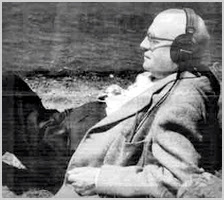


Just to get to Nietzsche and Music. That is to say, literally for Nietzsche tragedy, the Greek music drama...
 Here's Orpheus.
 And the becoming-human of dissonance, that is, of course, compositionally speaking, Beethoven


q.v. should you doubt it this array of
Pictures from aeons ago, taken in 2012, including Andrew Bowie, Lydia Goehr, Roger Scruton, et al and sundry, all rescued from imminent 'closing of the net,' i.e., the shuttering of Picasa.
Drat on that last.
I also offered a paper there that was in production as The Hallelujah Effect (published in 2013) sort of like the picture below which was taken at the Phenomenology and Media conference in San Diego (I took all the pictures in London ... I also took pictures in San Diego, but not this one...)


And the space of sound. And time.

And a fair amount of digital reflection...


Monday, August 1, 2016
Sunday, July 31, 2016
Covering Covers: John Cage 4'33 by Dead Territory
John Cage - 4' 33'' Death Metal Cover by Dead Territory
Monday, July 25, 2016

Wednesday, July 20, 2016
Monday, July 11, 2016
Halleulah in Naumburg
Philosophisches Abendgespräch ....


Der “Hallelujah Effekt”: Zur technischen Reproduktion des Klangs oder Musik

Was wird geboten?
The Hallelujah Effect setzt ein mit einer Analyse eines Liedes von Leonard Cohen, den berühmten Hallelujah und einer einzigartigen YouTube-Video-Performance durch k.d. lang und u.a., Nina Simone, und verortet sie anschließend in einer ausführlichen Auseinandersetzung mit der immer weiter um sich greifenden Kultur der Faszination Sozialmedien (Facebook und Twitter). Er wirft ein Licht auf die gegenwärtige Netzwerkkultur und konfrontiert sie mit Adornos Überlegungen zum ,Raum‘ des musikalischen Klanges. Doch von hier wird Nietzsches Mahnung aufgegriffen, ,mit unseren Ohren zu lesen‘, wie es die Griechen taten, die die Erfinder einer Technik waren, den Klang mittels eines phonetischen Alphabets aufzuzeichen. Nietzsche erkennt darin den „Geist der Musik“ und veranschaulicht dies an niemand Geringerem für Nietzsches Verhältnis als Beethoven, obwohl wir könnten auch von Handel oder auch Bizet reden.
Babette Babich
z. Zt., Fulbright Professor
Humboldt University, Berlin
z. Zt., Fulbright Professor
Humboldt University, Berlin
Twittter: http://twitter.com/#!/babette_babich
Wann?
19:30 Uhr, Mittwoch, 20. Juli 2016
Wo?
Nietzsche-Dokumentationszentrum Naumburg
Jakobsmauer 12
06618 Naumburg/Saale
06618 Naumburg/Saale

Philosophisches Abendgespräch Prof. Babette Babich (New York): Der “Hallelujah Effekt”: Zur technischen Reproduktion des Klangs oder Musik, | Naumburg/Saale
Subscribe to:
Posts (Atom)