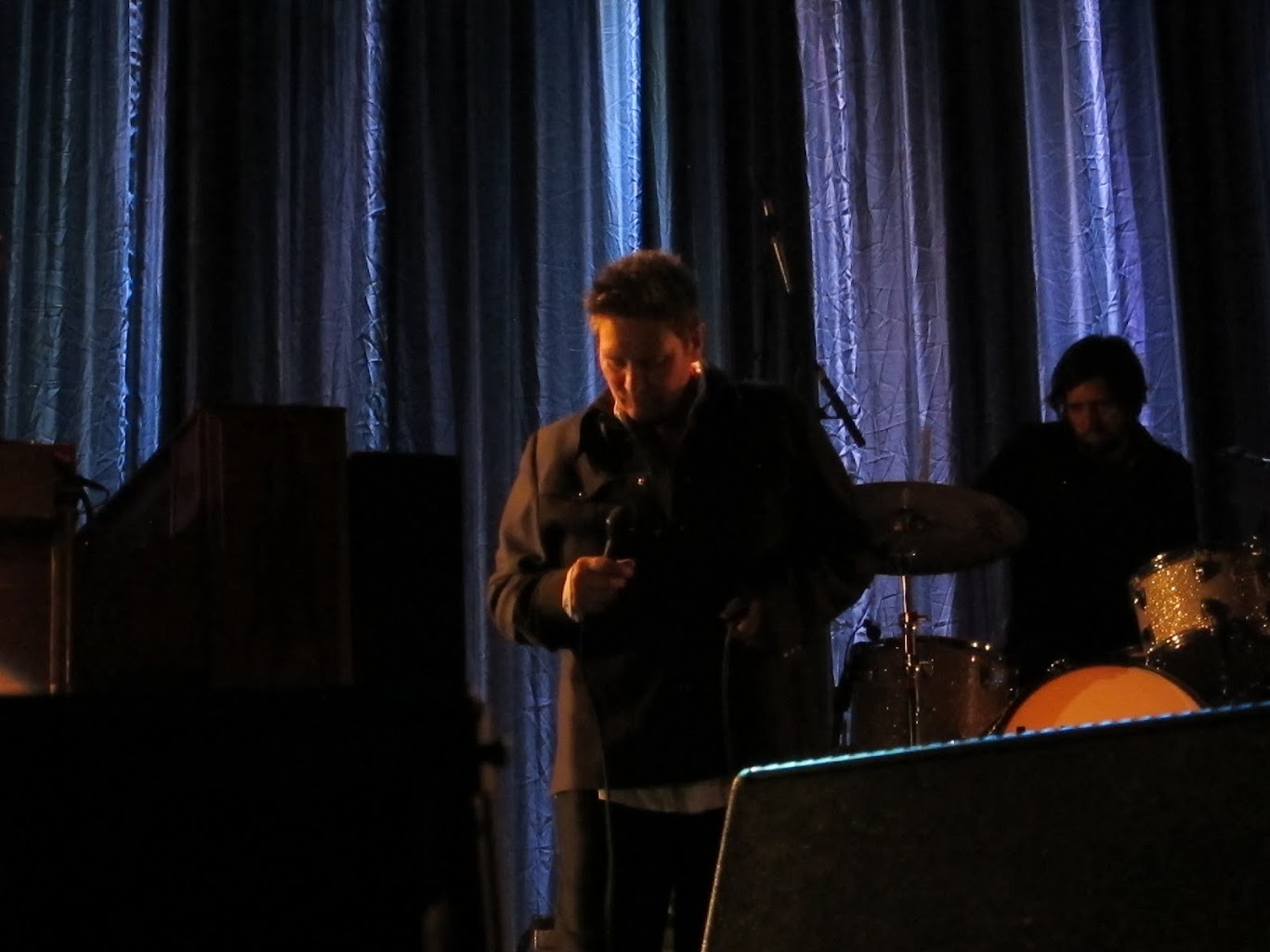
From a forthcoming essay

If Cohen’s Hallelujah is a lyric, that is: an “I” poem, like Bird on a Wire, perfectly pluralizable, like First we Take Manhattan, at the end of his life, if we may read this as punctuated in between with the ‘who’ of Who by Fire — I talk about this song along with Suzanne, in reflecting on Cohen in a collection dedicated to Cohen and philosophy — the pronouns change.
(See for a discussion, Babich, “Hallelujah and Atonement” in: Jason Holt, ed., Leonard Cohen and Philosophy (Chicago: Open Court, 2014), pp. 123-134.
Cohen’s Hallelujah already intimates the depth of his relationship with deity and at the end of his life Cohen will emphasize, quietly, firmly, that he doesn’t ‘believe’ in God (that is to say much rather that he ‘knows God’), writes a prayer not for his own death so much as his last Adam Kadmon style, I am thinking of my ex-father-in-law, the late Alan Strongin, and the title he chose for his suit addressed to, dialectic with the deity.
This is the gentle resignation, the leaving song, You Want It Darker. Here the poet speaks, we kill the flame: and then, in Hebrew like the Hallelujah a word of praise, here a word of readiness and response: hineni, hineni [here I am, here I stand] I’m ready, my Lord. There is that to repeat, as it does, but the song continues as one of affirmation deepened by the puzzle of thinking the divine:
If thine is the glory, mine must be the same: You want it darker.
A review written in German and released before his death puts it well: “Leonard Cohen has put out an album full of leave-takings [voller Abschiede] with You Want it Darker. It ranks among the best of everything he ever published.”[i]
That’s right enough and I am told by
my friend and colleague, Fordham University’s Provost, the late Stephen Freedman, that Cohen’s old
Montreal congregation has taken the song as significant in its own right for high
holiday services and reflection, which is something to think about in just the
direction I sought to explore in “Hallelujah and Atonement,” tracing the
reflections of Cohen’s earlier Who By
Fire, as he sings — and so ‘covers’ in his way — an old song, argued as dating
back to the 8th century, of the days of awe, Unetanneh Tokef, a song about the many ways of love and of loss, of
passing and of judgment.
[i] „Leonard Cohen hat mit
‚You Want It Darker‘ ein Album voller Abschiede aufgenommen. Es zählt zum
Besten, was er je veröffentlicht hat.“ Wolfgang Luef, „Leonard Cohen singt sein
letztes Liebeslied,“ Süddeutsche Zeitung,
25. Oktober 2016.